01
Geometry establishes time
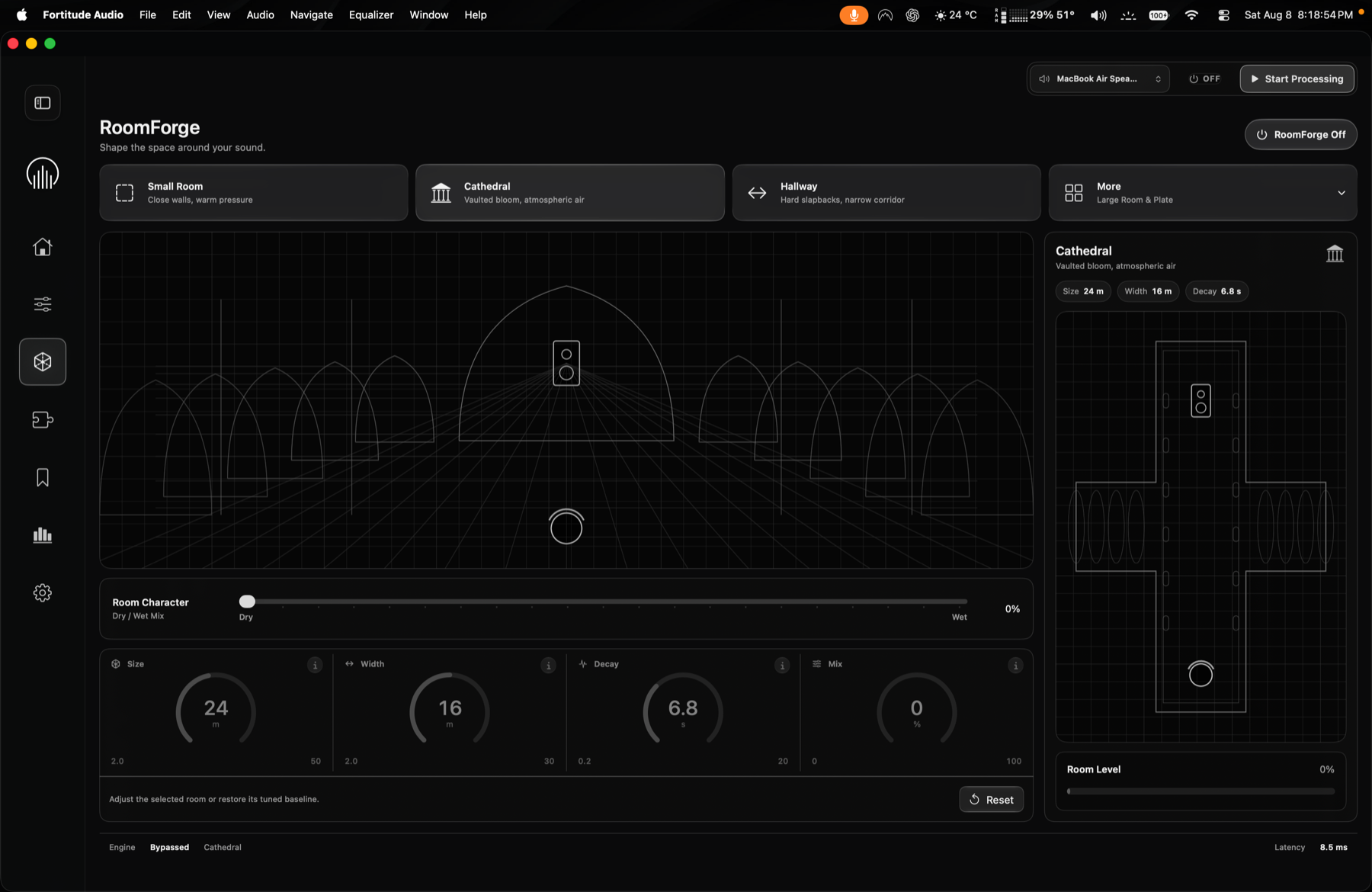
When a virtual ray travels from a source to a boundary and then toward a listener, its path length becomes a delay. Room width, depth, and height therefore change when reflections arrive and how widely they are separated.
02
Materials shape frequency
A hard surface and a heavily absorbing surface should not return the same spectrum. Frequency-dependent loss changes the tone of successive reflections and helps distinguish a bright corridor from a damped room.
03
Direction supports externalization
Timing alone can sound like a stack of echoes. Directional arrival cues and a coherent source/listener relationship help reflections feel connected to a space outside the dry signal.
04
Early and late fields work together
Discrete early reflections communicate nearby structure. A denser late field carries decay and overall room character. Their balance affects clarity, scale, and whether the environment feels plausible or deliberately stylized.